Our next liturgy will be on November 9 @ 5pm in the basement of the Episcopal Church of the Good Shepherd in Sioux Falls
Liturgy comes from the Greek word leitourgia, which means “work for the people.” It is a gathering time when we do the work of religious experimentation for each other with the Spirit of Jesus in our midst – sharing, praying, singing, communing – so that we can be more like Jesus in love, grace, and peace.
The liturgy has four parts: the introduction, where we gather together and sing; the word, where we hear the stories of our faith; the table, where we receive a tangible taste of God’s love; the sending, where we sing and prepare to go into the world to love others.
Good liturgy is best when it is internalized and embodied, so we follow the pattern and language of the historic church week after week so that it becomes memory. Great liturgy is best when it is accessible by the whole community of faith. To that end, the liturgies with The Pilgrim House are intentionally designed to be child- friendly and engage all our senses and imaginations. Kids can follow along with the pictures, and the celebrant guides the whole community through the liturgy. The kids may jump, dance, and talk loud because that’s what kids do. This is their liturgy, too.
When we come together to do the liturgy, leave at the door your preconceptions and expectations for the consumerist mindsets of “finding something meaningful.” Here’s something important to remember: we get to ascribe meaning to the events of our lives, including the liturgy. The measure of our faith is not the level of our emotional connectedness, but the extent of our love. And most of the time, love is hard and dangerous work.
What can I expect?
An easy to follow, yet historically and liturgically grounded liturgy that is accessible to children. We believe that the liturgy is nothing if it does not spark the hearts and imaginations of all people – including children. We don’t sacrifice tradition, but we don’t serve it either. We contextualize it so that it can truly be liturgy – the work for the people.
You can expect a vested celebrant, meaning that the pastor will be wearing the garments of ordained ministry from the historic church – alb, stole, and chasuble with colors matching the liturgical season. It’s a way for the pastor and the community to remember the sacred role of leadership in the church.
You can expect incense, candles, and water as markers of God’s presence in our midst. The incense reminds us that God’s presence is mystical and ethereal, floating around us and in us as we breath. The candles remind us of God’s everlasting light in the midst of darkness. The water reminds us that, even though God is ethereal and other, God is close enough to touch and nourish.
You can expect singing, because the goodness of God and the community can sometimes only be expressed in the joyfulness of music. St. Augustine is credited with the saying that “he who sings prays twice.”
You can expect a fresh take on the sacred stories, because the Holy Scriptures that have been nourished among us are meant to be breathed anew in our midst.
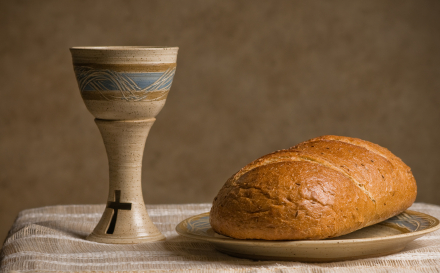
You can expect bread and wine as grace and symbol of God’s all-inclusive love in Jesus. We share the bread and wine as foretaste of the feasting in the Kingdom, symbol of our shared humanity, offering of the works of humanity’s hands, and nourishment of grace and peace from Jesus’ ongoing ministry.
And you can expect lots of laughter, distraction, and serious questioning about all the “things” of faith you can’t ask in traditional churches.
 The Pilgrim House